


You learn a lot about roadwork the first time you watch a crew try to compact a patch next to a fire hydrant. The big roller sits there, useless, because its drum is too wide to get within a foot of the casting. So someone grabs a plate compactor and spends twenty minutes hammering the edges, hoping the density holds. That scene has played out on countless job sites for decades, and it's precisely why the small asphalt roller-once dismissed as a toy for light duty-has quietly become one of the most indispensable machines in urban maintenance.
These compact units, typically weighing between one and three tonnes, are narrow enough to slip through a standard garden gate and nimble enough to work within inches of kerbstones, manhole covers, and drainage grates. Yet they are no longer underpowered. Modern designs pack vibration systems that rival much larger rollers, thanks to refined eccentric weights and variable frequency controls. Some even offer split drums that oscillate independently, which means you can compact tight against a curb without spalling the concrete edge-a trick that used to require painstaking handwork.
The numbers reflect a steady, if unglamorous, growth. Global sales of rollers under four tonnes reached roughly $400 million in 2025, and the market is expected to expand about 6 percent annually through the early 2030s. That is not the stuff of headlines, but it does tell you something about the pressures facing municipalities. Every water main break, every gas repair, every fibre-optic trench leaves behind a scar that needs proper compaction. Closing multiple lanes for a big roller is often impossible in congested areas, so crews turn to these small machines that can sneak in during overnight shifts, do the job, and disappear before the morning commute.
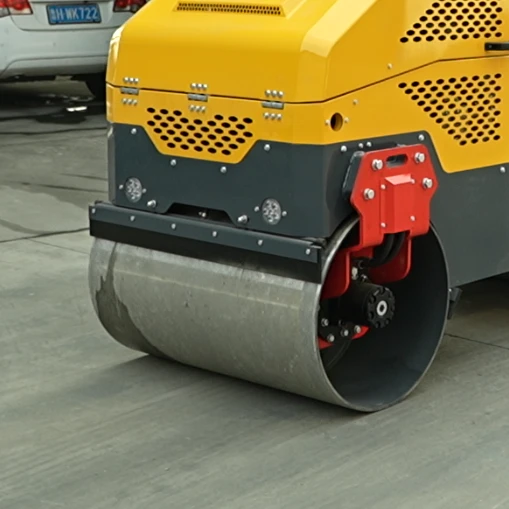
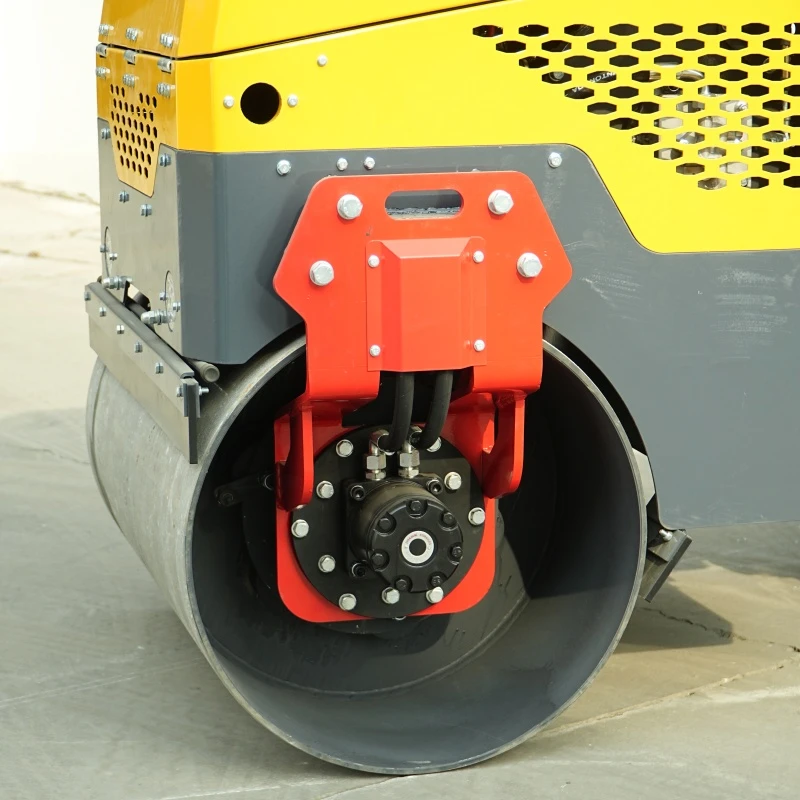
The technology inside them has changed more in the last five years than in the previous thirty. Diesel still dominates, but electric and hybrid models are showing up on dealer lots faster than anyone expected. A battery-powered unit can now run four to six hours on a single charge-enough for a typical shift of patchwork-and the near-silent operation is a lifesaver in hospital zones or residential streets where noise restrictions ban nighttime work. The electric versions also ditch the exhaust fumes and the persistent vibration that used to rattle operators' spines, two complaints that have driven many veteran drivers to early retirement.
Step inside the cab, and the contrast is striking. Older small rollers gave you a steering wheel, a throttle, and a prayer. The ride was brutal, and you spent half your time leaning out the window to see where the drum was tracking. Today, adjustable suspension seats, tiltable consoles, and wide-angle mirrors are becoming standard. A few premium models even fit a rear-facing camera that shows the drum-to-kerb gap on a small screen-a simple addition that saves hours of repositioning and rework.
Safety has caught up, too. Rollover protection structures are now mandatory on nearly all machines sold in developed markets, and automatic brakes engage the moment the operator leaves the seat. The old habit of hopping off a moving roller to check a joint-a terrifying practice that everyone pretended was normal-is finally being replaced by remote shutoffs and proximity sensors that slow the machine if someone strays too close. These are not just regulatory boxes to tick; they reflect a genuine cultural shift in an industry that has historically taken pride in toughness over caution.
The machine's utility has spilled far beyond road repairs. Landscapers use them to compact base layers for patios and driveways. Sports-field contractors rely on them for flattening artificial turf foundations. Solar farms, surprisingly, have become a growing market-access roads between panel rows need compaction, and the roller's narrow footprint fits without damaging the mounting structures underneath.
Rental yards have been a huge catalyst. Most small contractors cannot afford to buy a roller that might sit idle for weeks, but the big rental chains have stocked up on these compact units, making them available by the day or week. That has introduced the category to a whole new generation of operators, many of whom discover that a small roller can out-compact a plate compactor in half the time and with a fraction of the physical toll.
Of course, hurdles remain. Electric models still carry a higher upfront price than diesels, though total ownership costs often favour battery power once you factor in fuel and maintenance. Charging infrastructure on job sites is hit-or-miss, and some crews simply trust the old diesel grunt more. But as battery densities improve and portable fast-chargers become common, those objections are losing their sting.
What makes the small asphalt roller compelling in 2026 is not a single breakthrough. It is the accumulation of small, practical improvements-better vibration control, quieter operation, clearer sightlines, and the option to run silently on batteries. Together, they have turned a humble tool into a versatile workhorse that solves the kind of nagging, low‑profile problems that keep cities functioning. Nobody calls it the "baby roller" with a smirk anymore. It earns its keep, one tight corner at a time, and it has quietly proven that the smallest machine on site often saves the biggest headaches.