


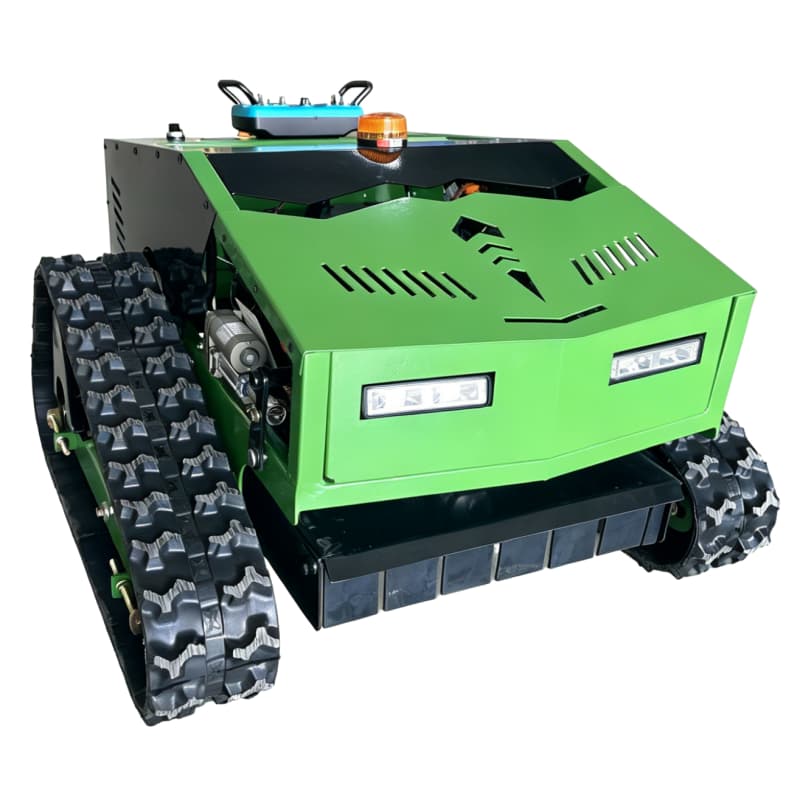
Mowing is usually straightforward when the ground is level, open, and easy to access. The situation changes quickly when grass grows along steep banks, uneven fields, roadside embankments, orchards, or other areas where conventional mowing equipment becomes difficult to operate. Remote control mowers are increasingly being considered for these conditions, offering a way to manage vegetation while allowing the operator to control the machine from a safer position.
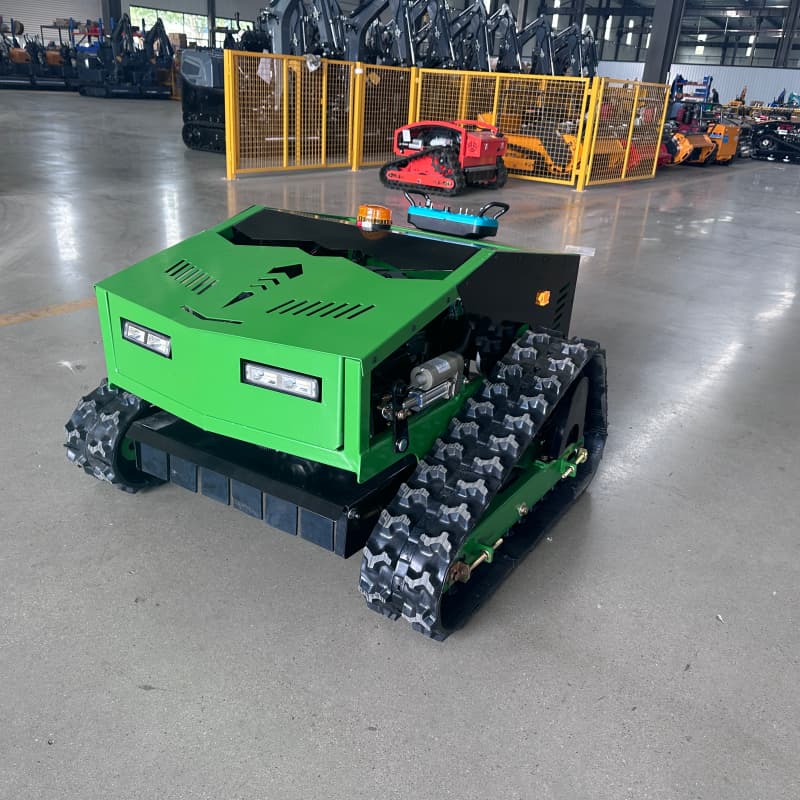
One of the main differences is the separation between the operator and the cutting machine. Instead of sitting on the mower or walking directly behind it, the operator can use a handheld remote controller to guide the machine from a suitable location. This can be especially useful on slopes, where maintaining a stable footing can be difficult. A recent industry safety guide notes that remote-controlled mowers still have specific operating limits on gradients and that factors such as wet weather, traction, terrain, and safe working distances need to be considered before use.
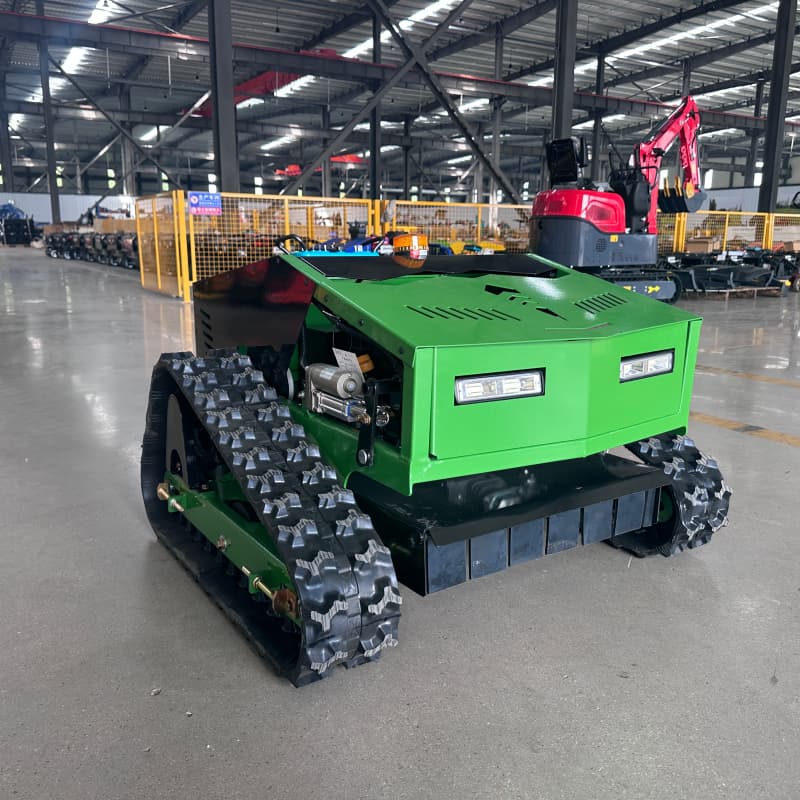
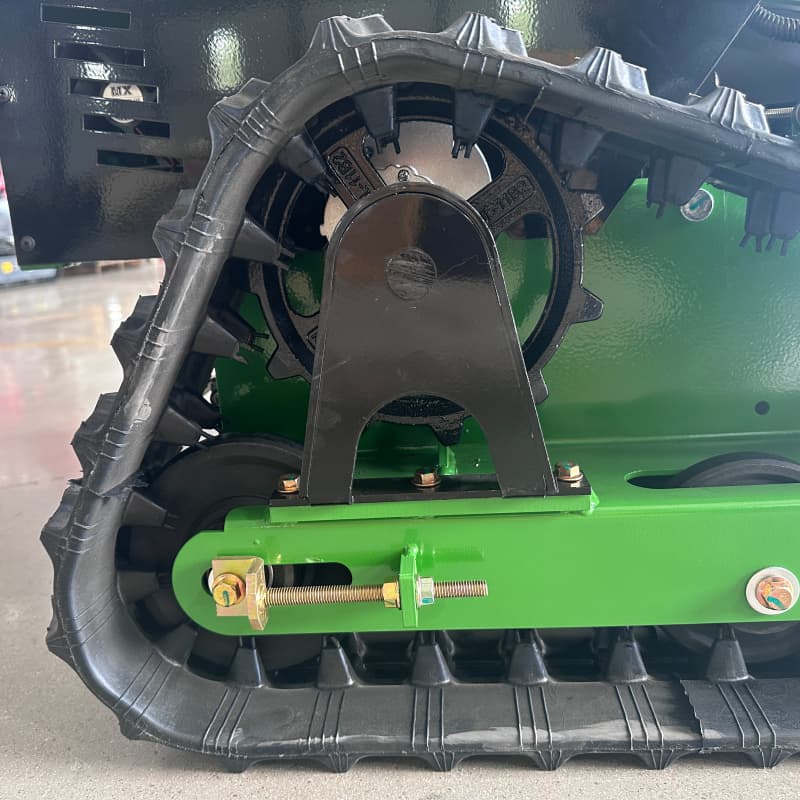
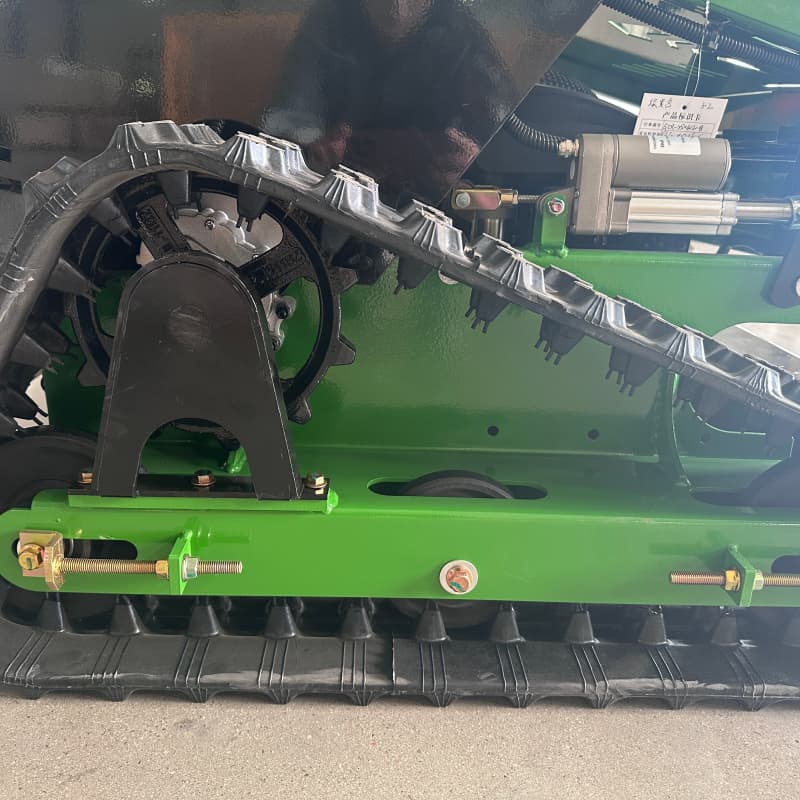
Tracked designs are particularly suited to rough ground. Compared with ordinary wheels, crawler tracks provide a larger contact area with the surface, which can help maintain traction on soft soil, grass-covered slopes, and uneven terrain. A lower center of gravity can also contribute to stability, although actual performance depends heavily on the machine design and the conditions at the worksite. Research into remote-controlled mowers has also highlighted the potential of compact tracked machines for maintaining steep slopes while reducing the need for operators to physically enter hazardous areas.
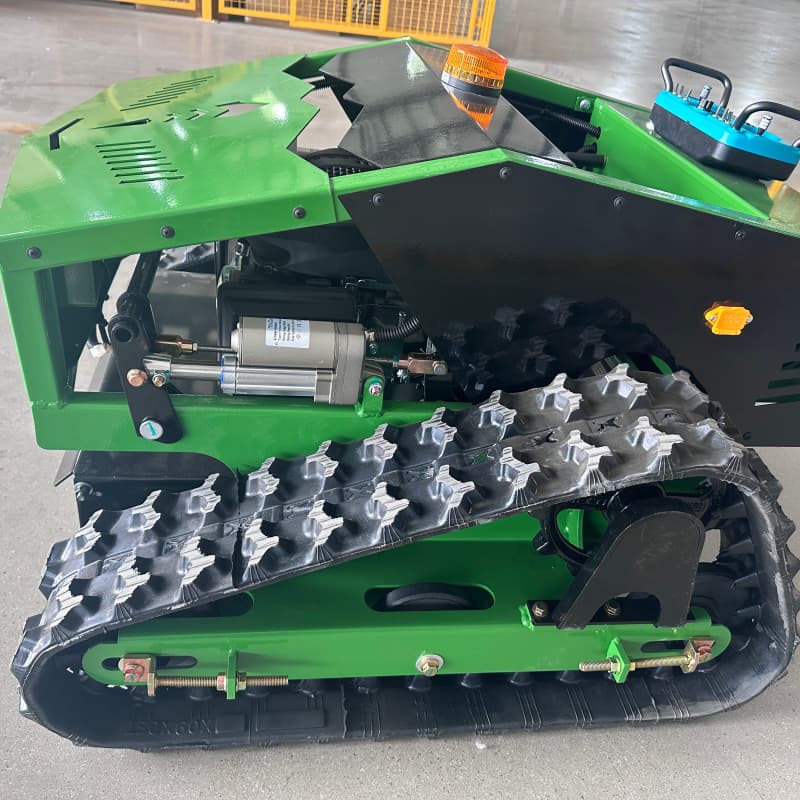
The cutting system is another important part of the machine. Different mowing jobs may involve short grass, tall weeds, brush, or dense vegetation, so the cutting deck and blade arrangement need to match the working environment. A machine intended mainly for lawns may not be suitable for heavy vegetation on a roadside bank. For commercial users, cutting width, engine or motor output, travel speed, ground clearance, and maintenance access can all influence how efficiently the equipment performs over a full working day.
Remote control mowing also has applications beyond traditional lawn maintenance. Agricultural operators can use compact machines between orchard rows or on uneven farmland, while landscape crews may use them for maintaining large estates, parks, and difficult-to-reach green areas. Roadside vegetation, drainage banks, canal edges, solar installations, and other infrastructure sites are additional areas where remote operation can be useful.
Another practical advantage is reduced physical exposure. On a steep hillside, the operator can remain on more stable ground while observing the mower and adjusting its direction. This does not eliminate risk, however. Flying debris, loss of traction, unexpected obstacles, machine rollover, and changing weather conditions remain important concerns. Operators need to keep the recommended safety distance, inspect the site before mowing, and follow the operating instructions for the specific machine.
For buyers, choosing a remote control mower should therefore involve more than comparing engine power or maximum slope figures. The actual condition of the land matters. Wet grass, loose soil, stones, hidden holes, vegetation density, and the presence of obstacles can all affect performance. Even a machine designed for steep slopes may have a much lower practical working limit under unfavorable conditions.
As labor availability, site safety, and difficult-to-access maintenance areas continue to influence vegetation management, remote control mowers are finding a broader role in professional outdoor work. Their value is not simply that they can mow without an operator sitting on the machine. More importantly, they provide another way to approach terrain where conventional equipment may be inefficient, uncomfortable, or unsuitable. When properly matched to the site and operated within its limits, a remote control mower can make demanding vegetation maintenance more manageable while giving crews greater flexibility in how and where mowing work is carried out.