


Material handling is often one of the less visible challenges on a construction or landscaping project. Moving soil, gravel, sand, rubble, and other loose materials can take considerable time when access is limited or the ground is uneven. A tracked mini dumper is designed for this kind of work, combining a compact body with crawler tracks and a tipping load bed to make short-distance transportation easier.
Unlike conventional wheeled transport equipment, a tracked mini dumper spreads its weight across a larger contact area. This gives the machine better traction on soft soil, muddy ground, slopes, and uneven surfaces. It can also be useful in areas where a larger truck simply cannot reach. Narrow entrances, garden paths, renovation sites, orchards, and small construction projects are typical examples where a compact tracked machine can offer a practical advantage.
Size is one of the main reasons contractors consider this type of equipment. Many mini dumpers are designed with relatively narrow chassis dimensions, allowing them to pass through restricted access points and work close to buildings or other structures. This can reduce the need for manual transport with wheelbarrows, particularly when materials have to be moved repeatedly between different parts of a site.
The crawler undercarriage also changes how the machine behaves on difficult terrain. Rubber tracks can provide steady contact with the ground and help reduce the tendency to sink on softer surfaces. At the same time, operators still need to consider the slope, load condition, ground stability, and working environment before entering challenging areas. A compact machine is not a substitute for proper site assessment or safe operating practices.
Another important feature is the hydraulic tipping system. Instead of requiring workers to manually unload the material, the load bed can be raised to discharge its contents. This is particularly useful when handling soil, aggregate, demolition debris, or agricultural materials. Some configurations are also available with higher tipping positions or self-loading functions, giving users more flexibility depending on the type of work being carried out.
The versatility of a tracked mini dumper extends beyond traditional construction sites. Landscaping crews can use it to move topsoil, mulch, stones, and green waste. Farmers may find it useful for transporting materials around fields, orchards, and other areas where conventional vehicles have limited access. It can also support renovation, property maintenance, forestry, and municipal work, especially when the working area is too confined for larger equipment.
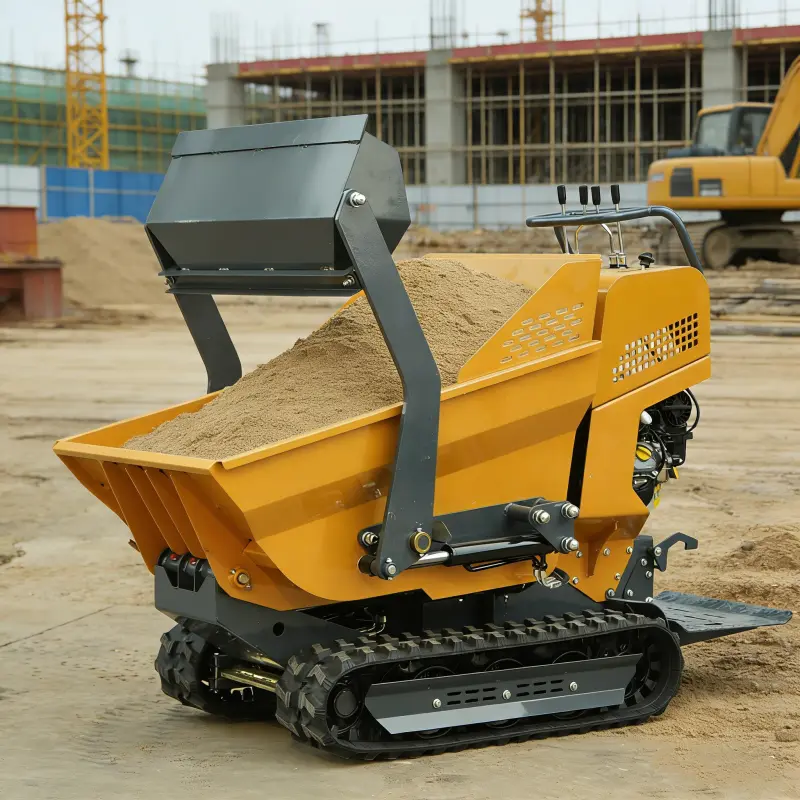
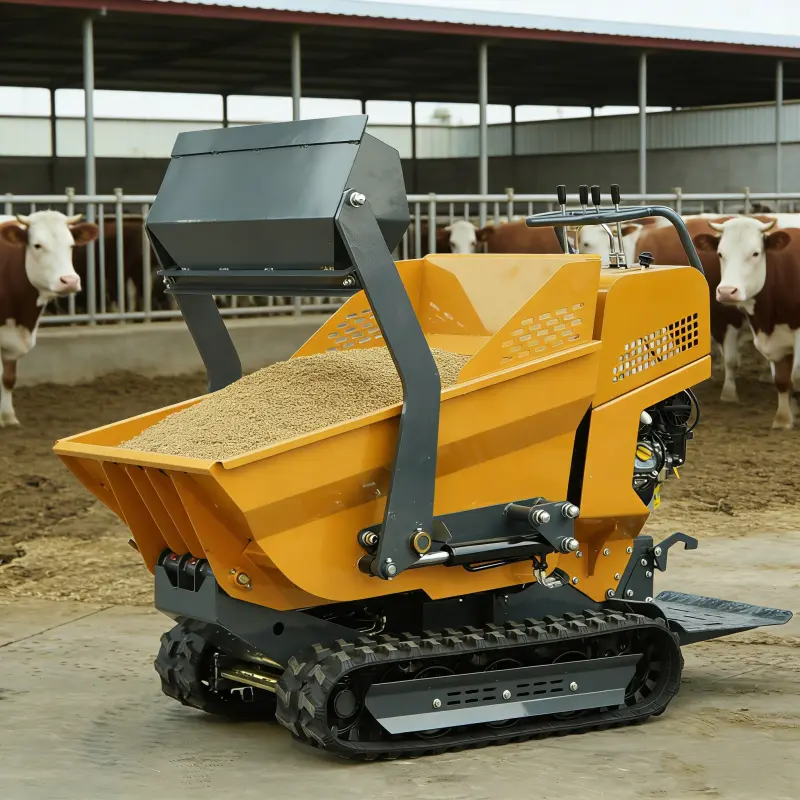
Capacity is another factor that should be matched to the job rather than selected simply by choosing the largest available machine. Mini tracked dumpers can vary significantly in payload, with compact models carrying several hundred kilograms and larger versions handling substantially more. Choosing an appropriate capacity can help balance productivity, maneuverability, transport requirements, and operating costs.
As construction sites become more compact and projects increasingly involve difficult access conditions, small material transport machines are gaining a practical role alongside excavators, loaders, and other equipment. A tracked mini dumper does not replace larger machinery, but it can fill an important gap between manual handling and full-size transport vehicles.
For contractors, landscapers, farmers, and property maintenance teams, the value of a tracked mini dumper often comes down to one simple point: it can keep materials moving when space, terrain, and access make conventional transport inefficient. With the right configuration and responsible operation, this compact machine can help reduce unnecessary manual work while making day-to-day material handling more manageable.