


Operating a mower on steep terrain is fundamentally different from working on flat ground. When that mower is remote-controlled, the operator loses the physical feedback of seat-of-the-pants sensation-no leaning into turns, no feeling the machine's center of gravity shift through the chassis. This places an extraordinary burden on two interrelated factors: track grip and overall stability. For groundskeepers, landscape contractors, and public works departments evaluating such equipment, understanding how these systems interact is the difference between efficient slope management and a costly rollover incident.
The conversation about grip must begin with track design, not merely track width. While wider tracks distribute weight more evenly and reduce ground pressure, their tread pattern determines whether the machine holds a side slope or begins a slow, unstoppable slide. Look for chevron-style or zigzag lugs that run continuously across the track face, as these provide lateral bite when the machine is oriented across a hillside.
Shallow, block-style treads may perform adequately on sod but become hazardous on loose gravel or damp clay. Equally important is the track's rubber compound-softer blends offer superior adhesion on rock and hard-packed soil, though they wear faster on abrasive surfaces. Some manufacturers offer durometer ratings; a lower number indicates more pliable rubber, which is often preferable for slope work despite the trade-off in lifespan.
Beyond the track itself, the undercarriage geometry plays a decisive role in stability. A machine with a low-mounted drive motor and a track frame that sits close to the ground inherently possesses a lower center of gravity. When evaluating a mower, measure the distance from the track bottom to the chassis underside-the lower this clearance, the less leverage side forces have to tip the unit. However, excessive ground clearance, often marketed as a benefit for rough terrain, actually raises the roll center and degrades slope performance. The optimal configuration features suspended bogie wheels or torsion axles that allow individual track sections to conform to uneven surfaces while maintaining constant ground contact. This articulation prevents the machine from teetering on a single high point, which is a common precursor to loss of control.
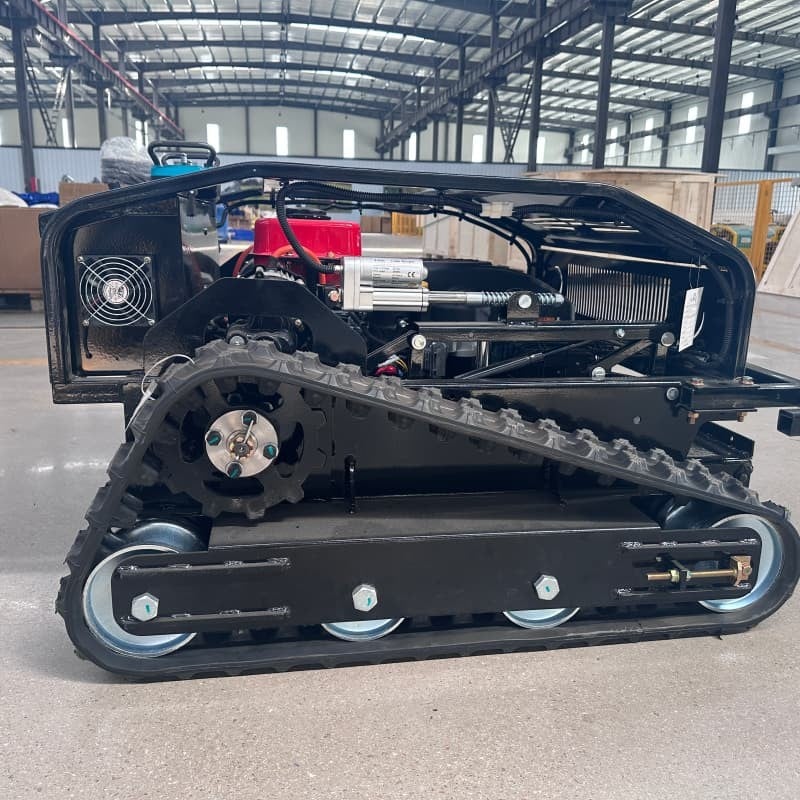
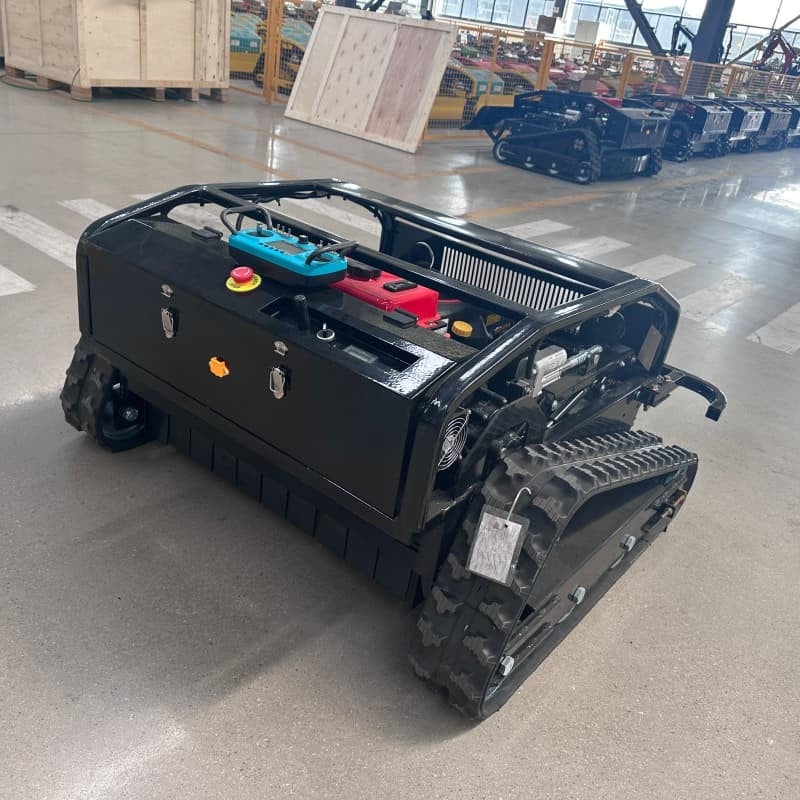
Suspension tuning is another layer that is frequently overlooked. Rigid track frames transfer every bump and undulation directly to the chassis, causing the mower to bounce and momentarily lose traction on the uphill track. This intermittent lift can trigger a cascade effect-once the uphill track unweights, the downhill track bears the full load, increasing its sinkage and creating a self-reinforcing slide. Progressive suspension systems with damped recoil keep both tracks planted, even when traversing washboard surfaces or crossing eroded gullies. During a test, deliberately drive the mower over a series of small berms while observing whether the tracks maintain consistent shadow lines on the ground; broken or interrupted shadows indicate poor ground-following capability.
Remote-control dynamics introduce a unique stability variable: operator reaction time and joystick finesse. In a cabbed machine, the operator feels the tilt and instinctively counter-steers or reduces speed. In a remote unit, that sensory cue is absent, making electronic stability aids critically important. Assess whether the system includes an inclination sensor that automatically modulates travel speed or limits steering angle when side slopes exceed a preset threshold. The best systems do not simply beep warnings; they actively intervene by reducing throttle or applying gentle counter-rotation to the downhill track, buying the operator precious seconds to correct a developing slide. Test this feature by traversing a known steep area and deliberately initiating a sharp turn-a well-calibrated system should resist the turn rather than executing it abruptly.
Ground pressure distribution, often expressed in psi or kPa, tells only part of the story. More meaningful is the pressure ratio between the front and rear track contact patches under loaded conditions. With the mower deck engaged and full fuel, have someone observe the track from the side while you articulate the boom or raise the deck. If the front idler wheels visibly lift or the track shows excessive sag, the design has poor weight transfer characteristics. A stable machine will maintain a nearly flat track profile regardless of implement position, ensuring that the entire tread length contributes to grip rather than just the rear third. Additionally, check the track tensioning mechanism-spring-loaded or hydraulic tensioners that automatically compensate for thermal expansion prevent slack tracks from derailing on side slopes, a failure that can turn a routine mowing pass into a dangerous recovery operation.
Wheel versus track debates often dominate discussions, but in slope applications, the comparison is clear. Tracks spread load across a larger surface area, reducing ground pressure and minimizing turf damage on soft soils. Yet tracks introduce their own trade-offs: they generate higher rolling resistance on paved transitions and can scrub sideways when making tight turns on steep inclines. To evaluate this, perform a figure-eight maneuver on a 20-degree slope. Observe whether the mower's turning radius expands significantly compared to flat-ground performance-excessive radius growth indicates the tracks are losing lateral grip and sliding rather than steering, which compromises both stability and cut quality.
Finally, real-world validation matters more than theoretical specifications. Insist on a demonstration on the actual slope conditions where the machine will operate, not a manicured test track. Bring a clinometer to measure the angles and compare them against the manufacturer's rated maximum. More importantly, test the emergency stop response while on the slope-when the operator releases the control pendant or triggers the safety tether, the machine should brake smoothly rather than locking tracks abruptly. A sudden stop on a hill can pitch the machine forward or cause it to pivot unexpectedly, especially if the mower deck is raised. The best designs incorporate progressive braking that decelerates at a controlled rate, maintaining directional stability throughout the halt.
In assessing track grip and stability, the buyer must adopt the mindset of a forensic examiner rather than a spec-sheet reviewer. Every component-from the rubber's Shore hardness to the suspension's damping curve-interacts to create a machine that either inspires confidence or induces white-knuckle anxiety. The time invested in evaluating these details pays dividends not only in safety but in the consistency of the finished cut, as a stable platform allows the cutting deck to follow the terrain without scalping or leaving uncapped strips. In the end, the most capable slope mower is the one that makes difficult terrain feel almost routine, allowing the remote operator to focus on productivity rather than survival.